



Product Description:
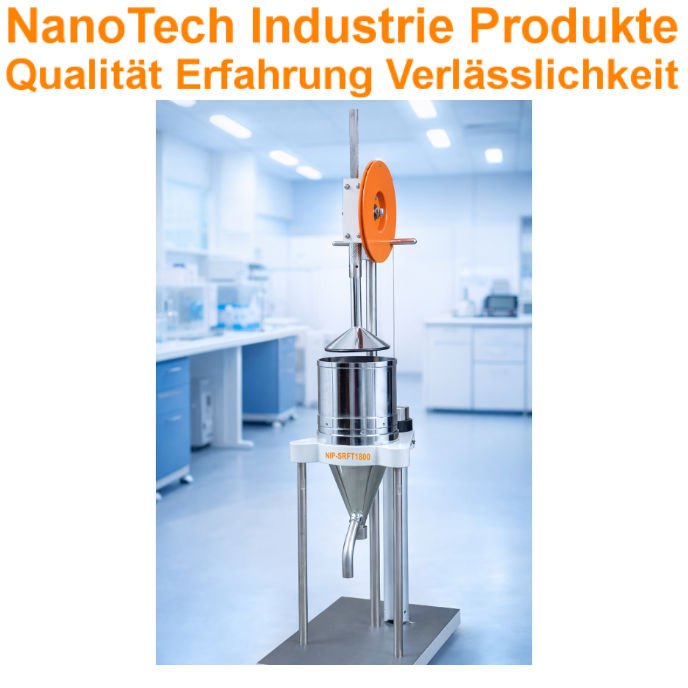
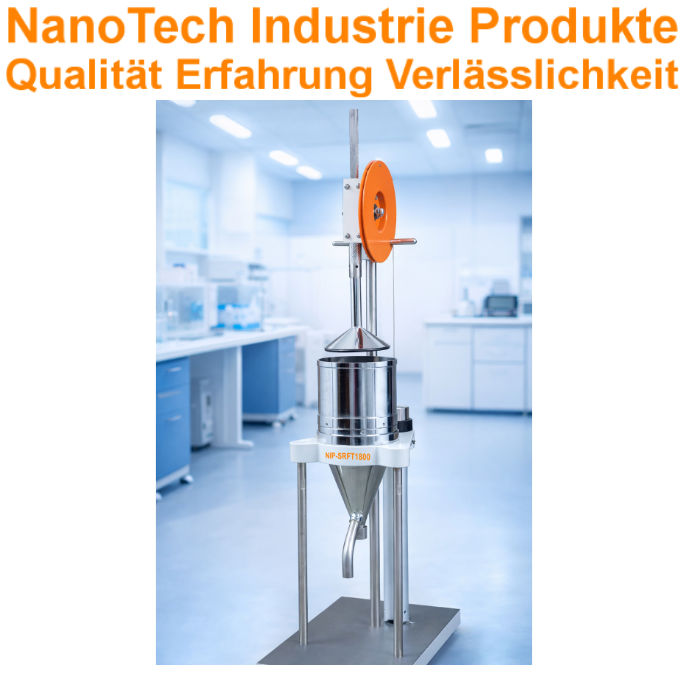
Nanotech Industrie Produkte Schopper Riegler Tester is a precision Schopper Riegler Grind Size Tester For professional determination of the fineness of solutions containing paper fibers in water. The test result is conveniently displayed according to the Schopper-Riegler System and in accordance with the testing standard ISO 5267-1 in Schopper-Riegler Scale led.
The Schopper-Riegler System provides precise information on the degree of fiber shortening in cellulose fibers. The grinding process shortens the cellulose fibers, resulting in a denser fiber mat, which is characterized by slower dewatering.
The Schopper Riegler Measurement Values When using cellulose, these values typically range from 12 SR to 65 SR.
This professional Schopper Riegler Tester is similar to the Canadian standard test device, although the measured values are the opposite of those in the Schopper Riegler Tester behave. Samples that quickly form a dense fiber mat have low water permeability and exhibit a higher Schopper-Riegler Scale However, when tested using the Canadian Standard Freeness Tester, these same samples yield low results.
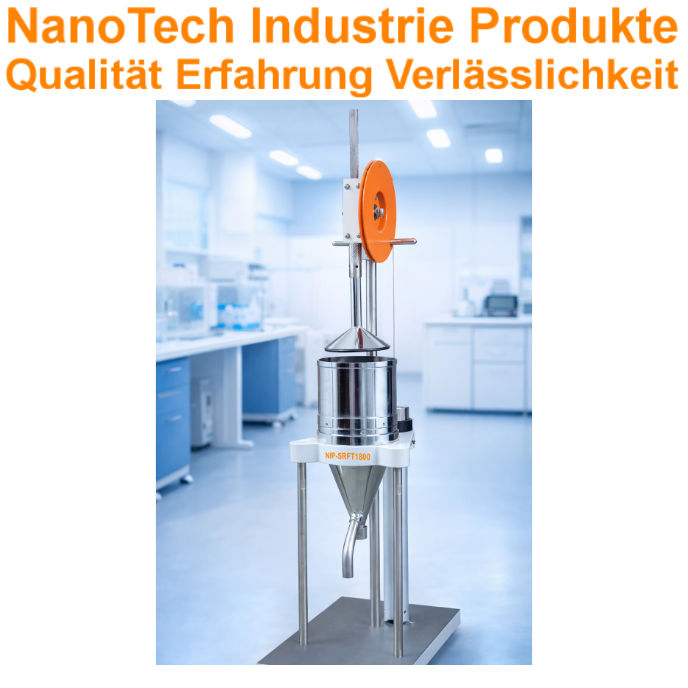
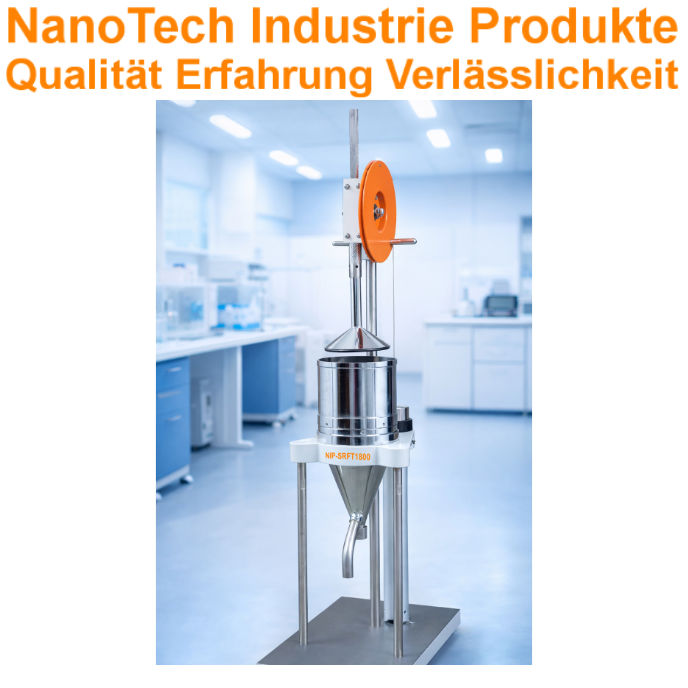
This professional Schopper Riegler Press Dewatering Tester It features an advanced and ergonomic design, combined with a high-quality filling chamber with an integrated sieve, a precision-machined sealing cone, and precision-machined containers with a combined scale in SR and ml, and is made of high-quality materials.
This Schopper Riegler Grind Size Tester It is user-friendly, easy to clean, and provides reliable results for research and quality management.
This professional Schopper-Riegler tester is based on recognized testing standards, including:
- ISO 5267-1 (Pulp—Determination of Drainability—Part 1: Schopper-Riegler Method)
- BS 6035-1 (Methods for Determining the Drainability of Pulp: Schopper-Riegler Method)
- CPPA C1
- SCAN C21
- AS/NZS 1301.206s
- TAPPI 227
Schopper-Riegler Freeness Tester - Applications:
The Schopper Riegler Tester is a precision Schopper Riegler Grind Size Tester For professional determination of the fineness of solutions containing paper fibers in water. The test result is conveniently displayed according to the Schopper-Riegler System and in accordance with the testing standard ISO 5267-1 and BS 6035-1 in Schopper-Riegler Scale led.
The Schopper-Riegler test (SR test) is a standardized method for determining the drainability of pulp suspensions and thus provides a direct indication of the freeness of cellulose fibers. In this test, a defined volume of diluted pulp is poured into a test chamber equipped with a precision screen. As soon as the sealing cone is raised, the water can drain through the screen while the fibers form a temporary fiber mat. The rate at which the filtrate penetrates this mat is a sensitive indicator of fiber beating, internal fibrillation, and fines content.
During the test, the filtrate is divided into two streams: one part flows freely into a measuring cylinder, while the other part is directed into the SR measuring chamber. The SR value corresponds to the volume retained in the measuring chamber, expressed in „Schopper-Riegler degrees.“ A higher SR value indicates slower dewatering and thus more beaten pulp, whereas a lower SR value means faster dewatering and less beaten fibers. This makes the SR method particularly well-suited for monitoring refining performance and the consistency of fiber treatment in the laboratory and production.
Engineers appreciate the SR test because it enables a fast, reproducible, and sensitive measurement of fiber modification that correlates well with the later behavior of the pulp in the papermaking process. Changes in the SR value reflect variations in fiber flexibility, specific surface area, fines content, and water retention capacity—all crucial parameters for sheet formation, strength development, and energy optimization during refining. The procedure is standardized in ISO 5267-1 and TAPPI T227, thereby ensuring international comparability and high process reliability.
Schopper-Riegler Paper Tester - Advantages:
- Precision Schopper-Riegler tester
- The Latest & Most Proven Design
- High-quality filling chamber with built-in strainer
- Precision-machined sealing cone
- Precision-machined containers with graduations in SR and ml
- Simple Cleaning Method
- High Accuracy & High Precision
- Flexible & Professional
- Made from high-quality materials
- User-friendly application
- User-Friendly Sample Handling
- Reliable Quality
- Ergonomic Design
- Manufactured in accordance with internationally recognized testing standards, including ISO 5267-1, BS 6035-1, CPPA C1, SCAN C21, AS/NZS 1301.206s, TAPPI 227
Schopper Riegler Grind Size Tester – Specifications:
| Model | NIP-SRFT1800 |
|---|---|
| Schopper Riegler Grind Size Test | Yes |
| New & Proven Design | Yes |
| Measurement Range | 0° SR - 100° SR |
| Measurement Ranges | 1st SR |
| Lead time | 149 ±1 s |
| Precision-Machined Screen | Yes |
| Precision-manufactured | Yes |
| User-Friendly Operation | Yes |
| Made from high-quality materials | Yes |
| Reliable & Efficient Performance | Yes |
| Ergonomic Design & Reliable Quality | Yes |
| Manufactured in accordance with internationally recognized testing standards, including ISO 5267-1, BS 6035-1, and TAPPI T227 om-99 | |
Schopper-Riegler freeness tester & sheet former – Scope of supply:
- Schopper-Riegler freeness and press dewatering tester
- Extensive Selection of Accessories
- Quality Certificate
- User Manual
- Advanced Technical Support
- Extended Warranty
Get more information about this product now. One of our experts will be happy to contact you with further helpful information.













 German
  English
  Dutch
Dutch  Dutch (Belgium)
  Danish
  Finnish
  French (France)
  French (Belgium)
  Irish
Irish  Luxembourgish
  Norwegian
  Norwegian
  Portuguese
  Scottish Gaelic
  Spanish
  Swedish
  Welsh
Welsh  Italian