



Product Description:
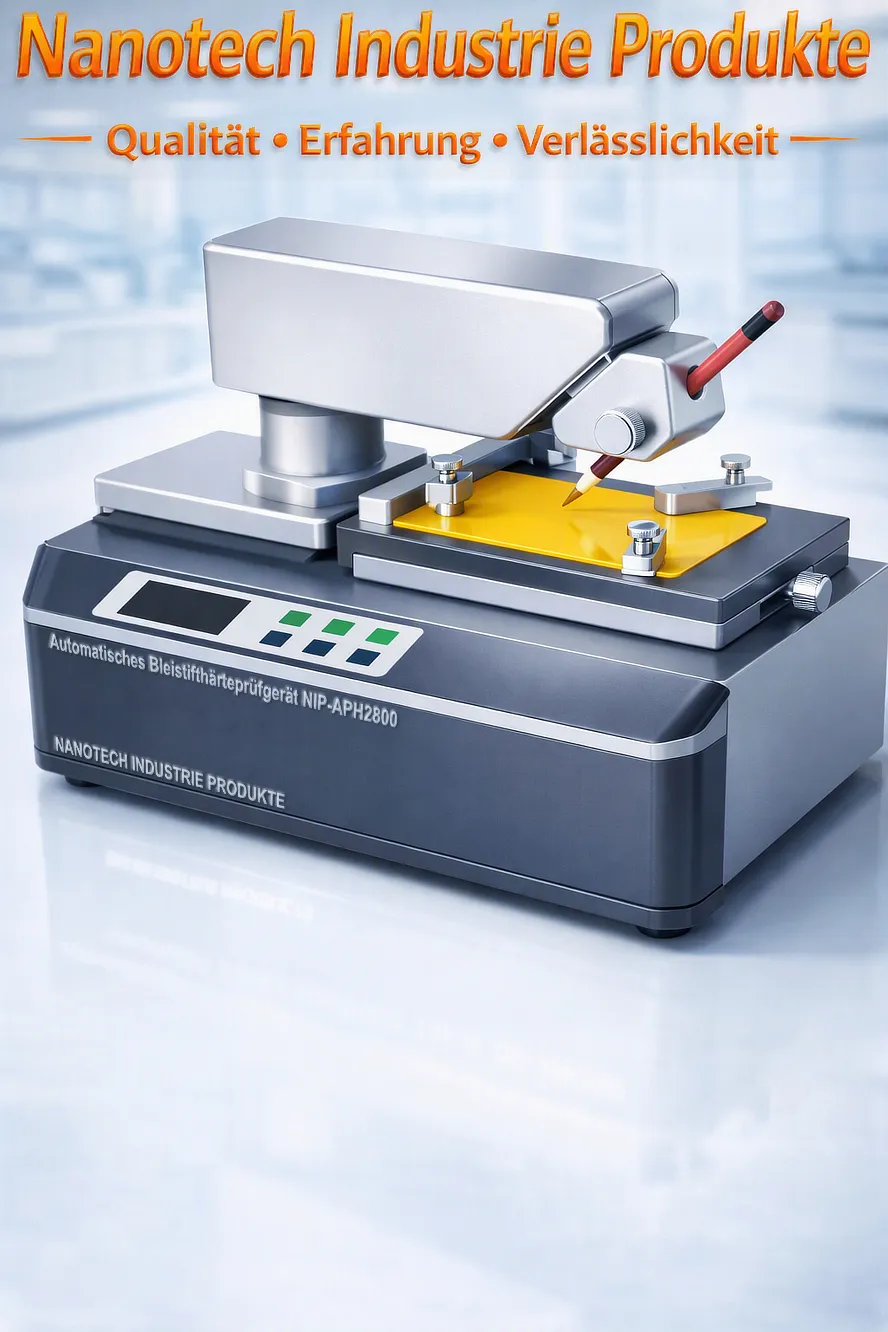
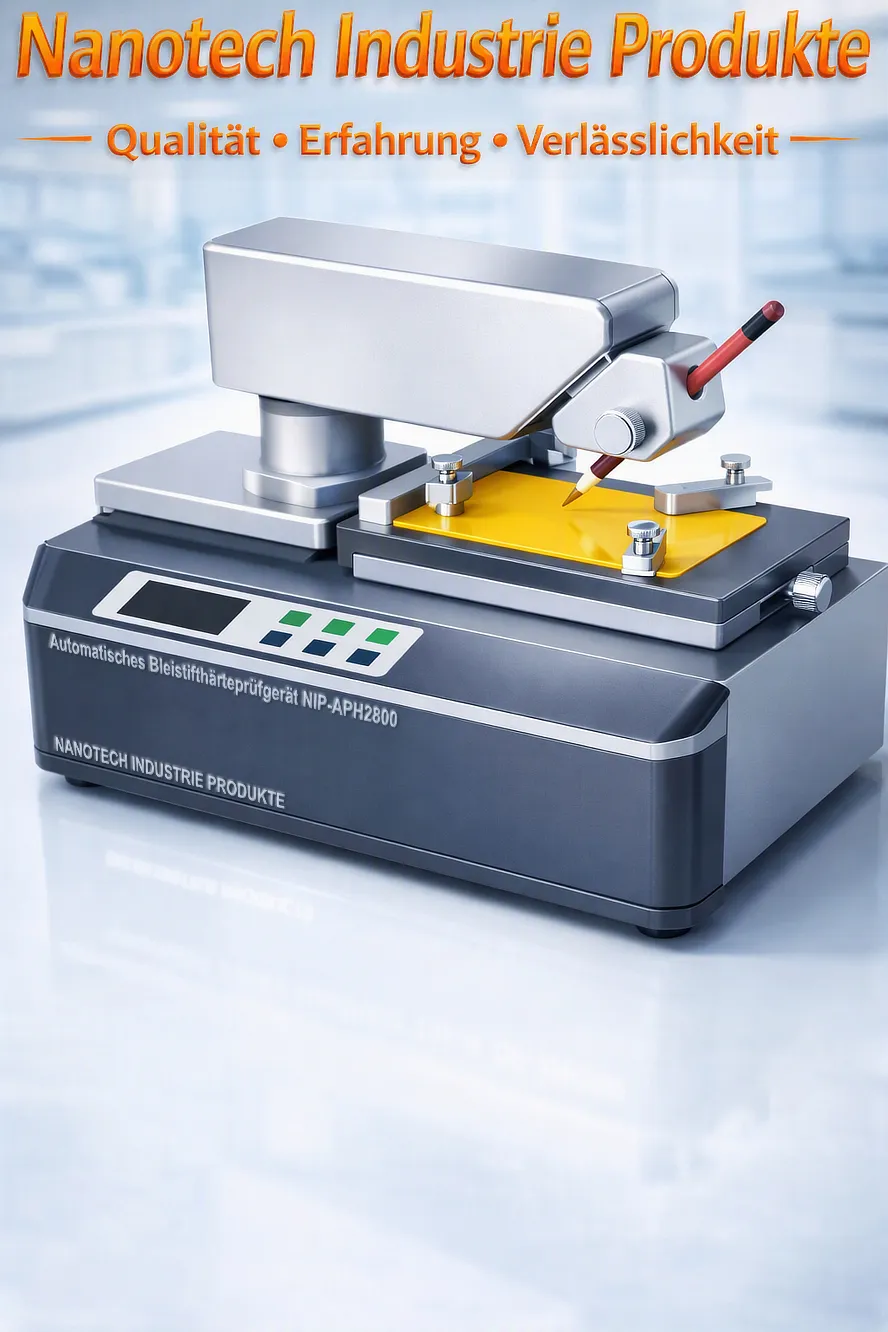
Nanotech Industrie Produkte Automatic pencil hardness tester is a professional electric Wolff-Wilburn pencil hardness tester, developed for the immediate determination of the hardness, wear resistance and scratch resistance of paint films and coatings applied to sample surfaces and substrates.
This advanced, precision-engineered Automatic pencil hardness tester is designed to monitor and test the mechanical resistance, surface hardness, and scratch resistance of surface coatings for research and quality management.
Depending on the specific testing requirements, various testing methods are available that are recommended for measuring the coating hardness and scratch resistance of coatings. One of the most frequently used methods is the Wolff-Wilburn hardness test, also known as the pencil hardness test.
This professional automatic pencil hardness tester It is equipped with state-of-the-art technology and offers a digitally adjustable test load in the range of 250 g – 1000 g, a continuously adjustable speed in the range of 0 mm/s – 10 mm/s, a large, easy-to-read LCD display, comfortable soft-touch buttons, reliable high-performance mechanics, a user-friendly pencil holder for quick changing between pencils of different hardness, a comprehensive set of pencils, a pencil sharpener, sandpaper, user-friendly menu navigation, user-friendly operation, user-friendly sample handling, an ergonomic design, reliable performance, durability and much more.
This advanced Electric pencil hardness testers is a reliable and precision-manufactured Wolff-Wilburn hardness tester, designed for the immediate and professional measurement of coating hardness, surface scratch resistance and wear resistance of paint films, surface coatings and sample surfaces.
This professional automatic pencil hardness tester is manufactured in accordance with internationally recognized testing standards, including:
- ASTM D3363 (Standard test method for determining film hardness using the pencil test)
- ISO 15184 (Paints and varnishes — Determination of film hardness by pencil test)
- BS EN 13523-4 (Coated metals — Test methods — Pencil hardness)
- BS 3900-E19 Test method for coating materials — Determination of film hardness by pencil test)
Automatic pencil hardness test – Application:
1. Purpose of the pencil hardness test
The pencil hardness test is a mechanical surface resistance test used to quantify:
-
Scratch resistance
-
Gloss/matt resistance (Mar Resistance)
-
Resistance to surface deformation
-
Completeness of the coating hardening
-
Film integrity and brittleness
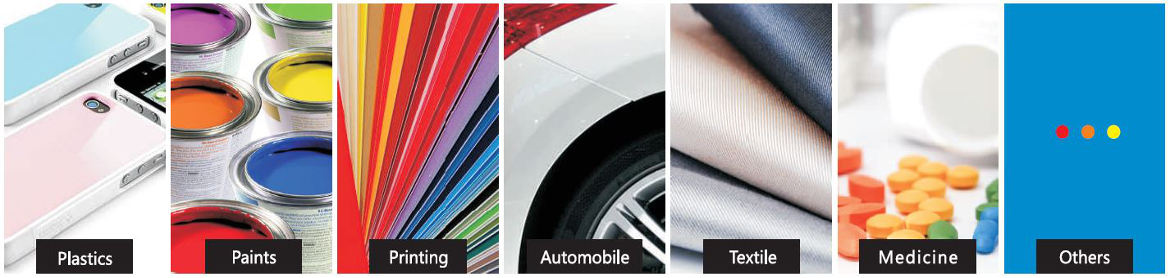
It is frequently used in:
-
Paints & Coatings
-
Polymer films
-
Automotive clear coats
-
Powder coatings
-
Printed Electronics
-
Optical coatings
-
Industrial surfaces
It provides a fast, reproducible and cost-effective hardness index that correlates with the crosslinking density of the coating and the mechanical surface strength.
2. Technical principle of the method
The test uses graphite sticks of defined hardness as a controlled, calibrated indenter.
Graphite hardness increases with:
-
higher tone content
-
smaller particle size
-
higher binder density
This makes pencil hardness a reproducible mechanical scale.
The pencil acts as a conical intruder with:
-
defined tip geometry
-
defined material hardness
-
defined contact or pressure
This creates a controlled scratch load on the coating.
3. Pencil hardness scale (Wolff-Wilburn scale)
The scale ranges from 9B (softest) until 9H (toughest):
-
B-pencils → soft graphite → low scratch resistance → for detecting changes in gloss/matting
-
H-pens → hard graphite → high scratch resistance → for detecting surface failure
Typical order:
9B → 8B → … → B → HB → F → H → 2H → … → 9H
Each step increases the scratching stress and surface tension.
4. Test setup (ASTM D3363 / ISO 15184 requirements)
4.1 Preparing the pencils
Engineers must prepare each pencil to a standardized geometry:
-
Sharpen to expose graphite
-
Sand the tip flat on 400-600 grit sandpaper.
-
Create a flat, circular contact surface
-
Ensure that the edge is sharp and perpendicular.
This ensures a consistent contact area and reproducible penetration pressure.
4.2 Test angle
The pencil must touch the surface at 45° ± 1° touch.
This angle controls:
-
Normal force
-
Tangential force
-
Scratching progress
-
Consistency of failure modes
Automatic testers (like your device) maintain this angle perfectly.
4.3 Force applied
Manual testers depend on operator force. Automatic testers apply a constant, calibrated load on (typically 500 g, 750 g or 1000 g).
This eliminates:
-
Operator variability
-
inconsistent pressure
-
Angular drift
-
Speed deviations
5. Testing procedure (engineering level of detail)
Step 1 — Start with the hardest pencil (9H) Go from hard to soft until the coating no longer fails.
Step 2 — Draw a 1 cm line under constant load The pencil is guided over the coating at a controlled speed (automatic testers ensure this).
Step 3 — Inspect the scratch mark
Experts are checking for:
-
Outbreak (material removal)
-
Cutting (penetrating down to the substrate)
-
Ploughing (plastic deformation)
-
Change in gloss/mattness
-
Cohesive failure (cracks within the coating)
-
Adhesive failure (detachment from the substrate)
Step 4 — Determine two values
ASTM D3363 defines:
-
Hardest pencil that does NOT cut through the coating → Hardness value
-
Softest pencil that does NOT mattify the surface → Mar resistance value
These two values describe the mechanical surface profile of the coating.
6. Technical Interpretation of the Results
High H value (e.g. 6H–9H)
Indexed:
-
high network density
-
high surface hardness
-
excellent scratch resistance
-
brittle or rigid coating
Applications:
-
Automotive clear coats
-
Industrial machine coatings
-
Powder coatings
Low H/B value (e.g. HB-2B)
Indexed:
-
flexible coating
-
lower network density
-
higher elasticity
-
lower scratch resistance
Applications:
-
Flexible films
-
Elastomer coatings
-
Soft-touch surfaces
7. Why this automatic pencil hardness tester is the better choice
This professional automatic pencil hardness tester eliminates:
-
Angular deviations
-
inconsistent pressure
-
Speed variations
-
Operator fatigue
-
subjective interpretation
This produces:
-
reproducible, traceable results
-
ISO/ASTM compliance
-
higher agreement between laboratories
-
improved QC reproducibility
Therefore, leading laboratories prefer automated systems.
The pencil hardness test is a controlled scratch test using calibrated graphite pencils to quantify the surface hardness, mar resistance, and mechanical durability of coatings. It is performed by ASTM D3363 and ISO 15184 regulated and delivers — especially with an automatic tester — highly reproducible, operator-independent results for industrial quality control and R&D.
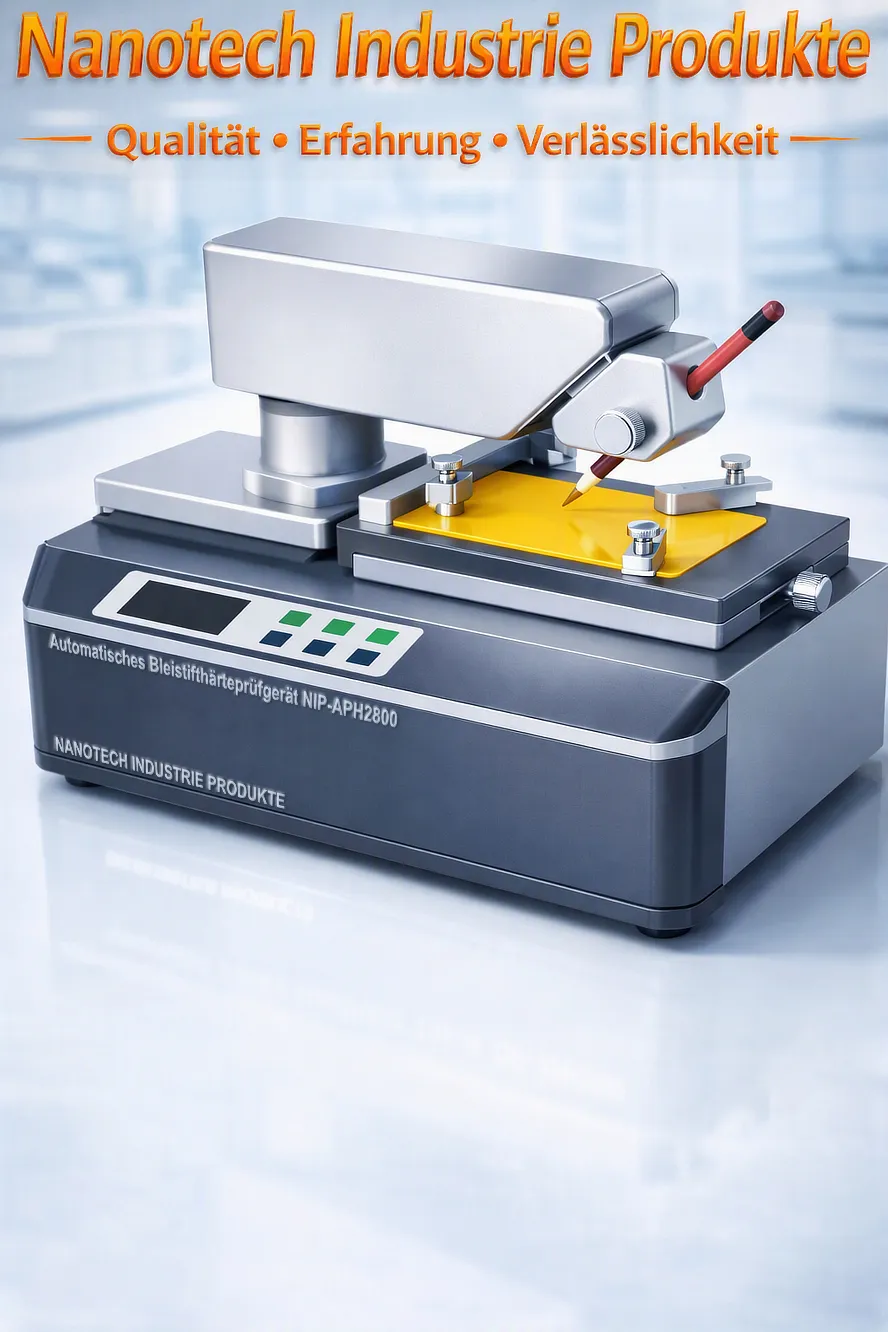
Automatic Wolff-Wilburn tester – special features:
- Automatic pencil hardness test
- Instant pencil hardness test at the touch of a button
- Large LCD display
- Comfortable soft-touch keys
- Digitally adjustable test load 250 g – 1000 g
- Continuously adjustable speed 0 mm/s – 10 mm/s
- Reliable high-performance mechanics
- User-friendly pencil holder
- Quick-swap technology for quickly changing between pencils
- Large selection of pencils included.
- Includes pencil sharpener
- Includes sandpaper
- User-Friendly Menu Navigation
- User-friendly application
- User-friendly sample handling
- High accuracy & high precision
- Ergonomic design & reliable performance
- Manufactured in accordance with international testing standards including ASTM D3363, ISO 15184, EN 13523-4, BS 3900-E19
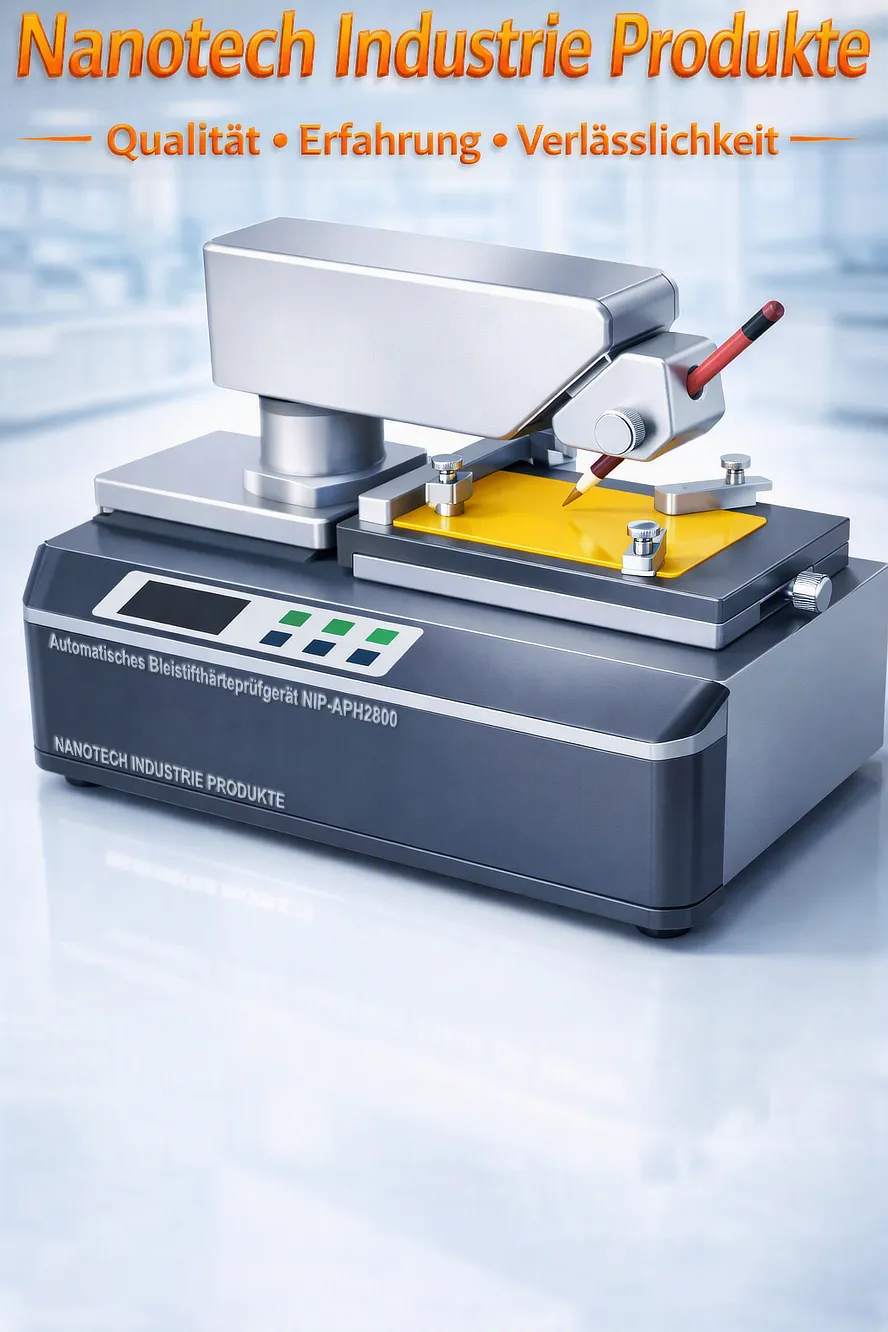
Wolff-Wilburn pencil hardness scale:
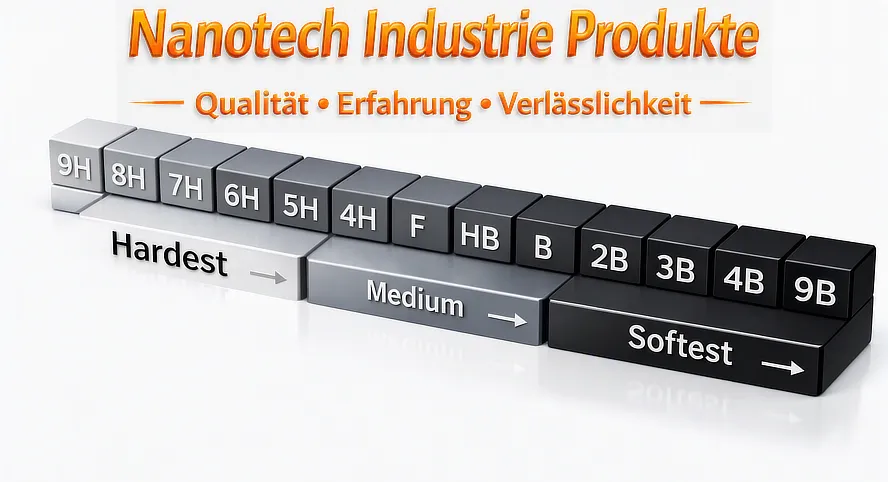
Automatic Wolff Wilburn paint hardness tester – Specifications:
| Model | NIP-APH2800 |
|---|---|
| Automatic pencil hardness tester | Yes |
| Professional instant pencil hardness test | Yes |
| Large LCD Display | Yes |
| Comfortable soft-touch push buttons | Yes |
| Speed | 0mm/s - 10mm/s continuously adjustable |
| Electronically adjustable test load | 250g - 1000g continuously adjustable |
| Wide range of pencils included | Yes |
| Pencil sharpener included | Yes |
| Sandpaper included | Yes |
| Easy-Mount pencil system | Yes |
| User-friendly menu navigation | Yes |
| User-Friendly Sample Testing | Yes |
| User-friendly sample management | Yes |
| High Measurement Accuracy & High Precision | Yes |
| Ergonomic Design & Reliable Quality | Yes |
| Operating voltage | 110V 60Hz & 220V 50Hz |
| Manufactured in accordance with internationally recognized testing standards including ASTM D3363, ISO 15184, EN 13523-4, BS 3900-E19 | |
Automatic pencil hardness tester – Scope of delivery:
- Automatic pencil hardness tester
- Accessories
- Carefully and professionally calibrated
- Calibration Certificate
- Quality Certificate
- User Manual
- Advanced Technical Support
- Extended Warranty
Get more information about this product now. One of our experts will be happy to contact you with further helpful information.












 German
 English
 Dutch
 Dutch (Belgium)
 Danish
 Finnish
 French (France)
 French (Belgium)
 Irish
 Luxembourgish
 Norwegian
 Norwegian
 Portuguese
 Scottish Gaelic
 Spanish
 Swedish
 Welsh
 Italian