



Product Description:
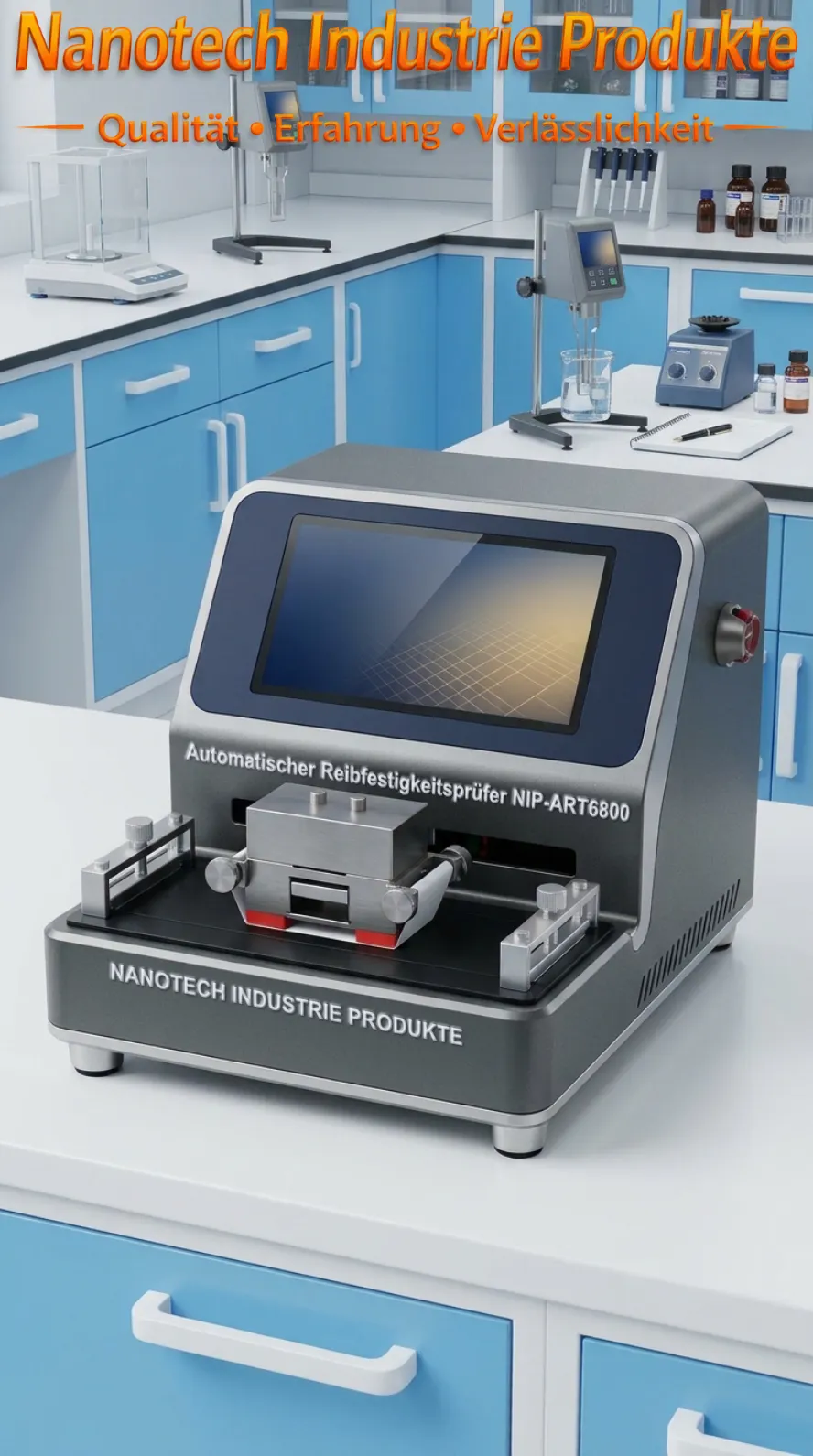
Nanotech Industrie Produkte Professional Automatic Friction Strength Tester is a professional automatic friction strength testing system of the Sutherland type For immediate testing and determination of the ink smudge and rub resistance of printed samples at the touch of a button.
In high-volume printing, packaging manufacturing, and industrial surface coatings, surface durability determines product quality. Whether evaluating printed folding cartons, protective laminates, or light-sensitive layers on photosensitive (PS) offset printing plates, poor ink adhesion leads to costly returns, customer complaints, and material waste.
The Professional Automatic Friction Strength Tester NIP-ART6800 The NIP-ART6800 offers quality assurance teams, printing engineers, coating chemists, and materials scientists an automated, highly repeatable standard for evaluating dry, wet, and abrasion resistance. As a high-precision friction tester, the NIP-ART6800 transforms qualitative surface inspections into precise, quantifiable data by simulating realistic abrasion stresses during transportation, handling, and processing.
Technical Overview & Operating Principle
This precision friction tester measures abrasion resistance by subjecting a test specimen to controlled surface-to-surface friction. The test specimen is clamped flat on the base of the device, while a standardized receptor medium (typically unprinted 80 g/m² coated paper, cut to 50 mm width) is attached to a weighted friction head.
During the test cycle of this professional automatic friction tester, the motorized friction block moves back and forth on the specimen at a speed, stroke length, and pressure load defined by the operator. After completion of the test cycle, the operators analyze the surface wear using two primary standard methods:
- Optical density decrease: Measurement of the loss of color or ink density using a densitometer before and after the test.
- Layer thickness reduction: Assessment of mass loss or physical film removal in the contact area.
By standardizing load, speed, and contact geometry, the NIP-ART6800 It eliminates operator influence and provides consistent comparative values across different production batches.
Key industrial applications
1. Quality control in packaging and commercial printing
Unprotected ink layers on folding cartons, flexible packaging, and corrugated containers are extremely susceptible to abrasion during transport. Quality engineers use this professional automatic rub resistance tester to assess rub resistance, correct ink film flaking defects, test overprint varnishes (OPV), and optimize UV/LED curing cycles before full production runs.
2. Prepress & PS plate production
Photosensitive flat printing plates require uniform surface coatings to ensure reliable image transfer and high print runs on offset presses. The NIP-ART6800 precision friction tester enables prepress specialists and plate manufacturers to test coating hardness and adhesion on PS plates to prevent premature image buildup during high-speed printing.
3. Surface coatings & industrial laminates
Beyond ink testing, researchers and coating engineers use the device to measure the abrasion, scratch and wear resistance of protective films, lacquered sheets, cardboard laminates and special barrier layers.
Key Technical Features & Benefits
- Microcomputer control with color touchscreen: The intuitive graphical user interface (GUI) simplifies operation. Operators can configure parameters quickly and without navigation delays or manual calculation errors.
- Continuously variable speed (5 to 95 cycles/min): The integrated micro-stepping drive enables smooth, stepless speed adjustment over a wide range of cycles per minute, thus covering various international testing standards.
- Non-volatile parameter memory: All user-defined test parameters are permanently stored in internal memory, enabling quick access to standard operating procedures (SOPs).
- Universal wide-range power supply: Equipped with a highly efficient power supply unit for 110V–220V (50/60 Hz), making this professional automatic friction strength tester directly compatible with international laboratory power grids without the need for external transformer devices.
- Flexible adjustment of the friction path: While standard setups have a stroke length of 60 mm, customer-specific mechanical stroke lengths (including 100 mm, 120 mm and 155 mm) can be configured for special test protocols.
This professional automatic friction strength testing device is designed in accordance with international testing standards, including:
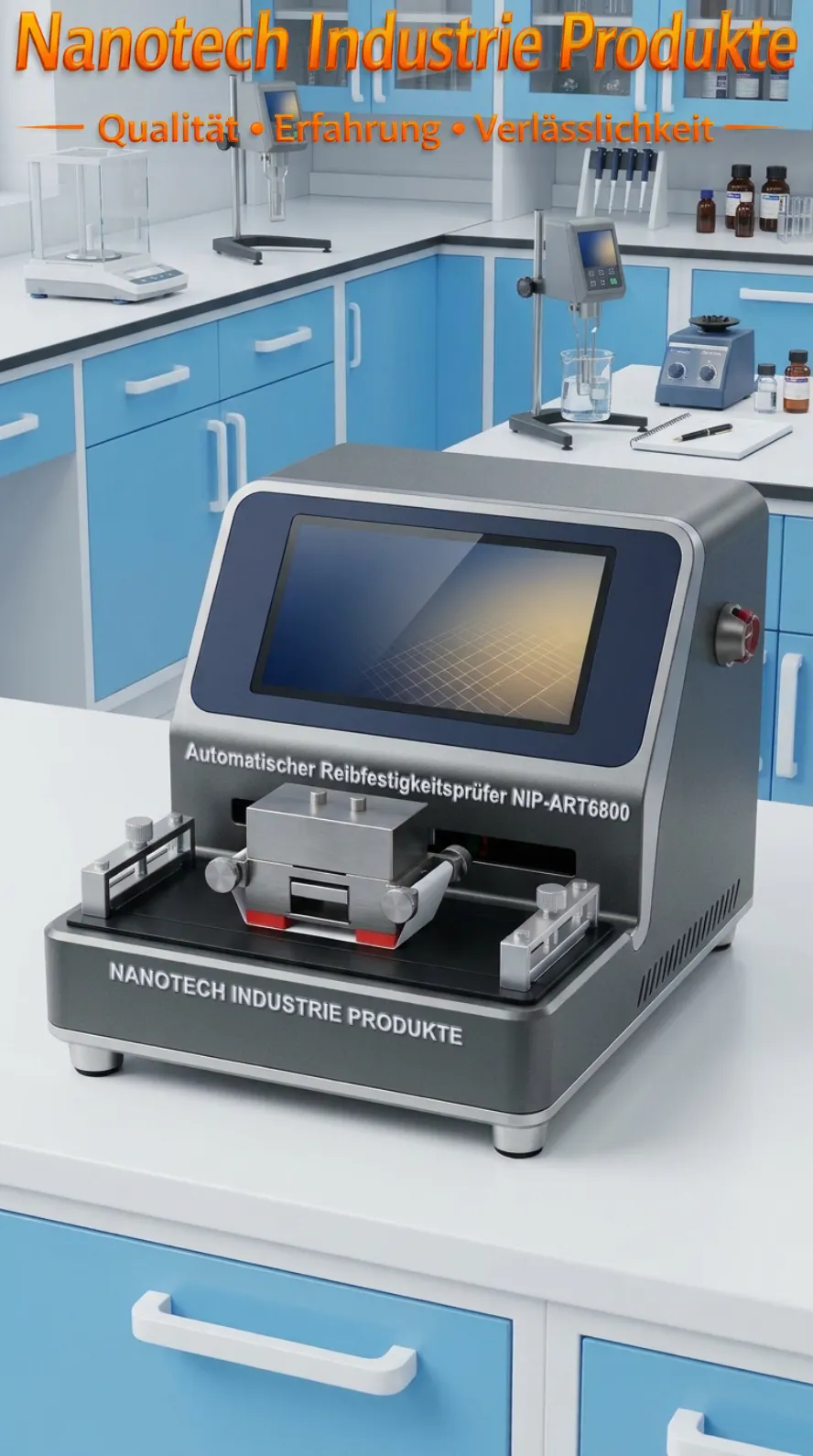
Automatic friction strength tester NIP-ART6800 - Applications:
In the commercial printing industry, packaging technology, and industrial surface coatings, mechatronic durability is just as crucial as visual appearance. Printed packaging or coated substrates must withstand significant mechanical stresses—including friction, chafing, and abrasion—during transport, automated handling, and end-use. When ink layers fail, products suffer visual defects, illegible barcodes, and premature returns.
To evaluate surface adhesion and abrasion resistance under controlled laboratory conditions, materials scientists and quality assurance engineers rely on standardized testing procedures from ASTM International and the International Organization for Standardization (ISO). The use of modern laboratory equipment – such as the Professional Automatic Friction Strength Tester NIP-ART6800 or the Precision Automatic Ink and Print Friction Tester NIP-ART6800 – enables engineering teams to perform standardized abrasion resistance tests, optimize hardening processes, and avoid product failures.
The physical principles of ink friction resistance testing
The ink friction strength test measures the mechanical cohesiveness of an ink or coating film and its adhesion to an underlying substrate (such as cardboard, flexible film, or metal foil). Advanced testing equipment such as the Precision Automatic Ink Rub Tester NIP-ART6800 automate this process by subjecting samples to controlled friction under defined parameters:
-
Contact force (pressure): Standardized weights exert a uniform normal force on the sample surface.
-
Relative motion: Motorized friction heads perform planar back-and-forth movements at precise, controlled speeds.
-
Receptor medium: Standardized receptor materials (such as unprinted 80 g/m² coated paper or special felt) absorb the transferred ink.
After completing a predetermined number of test cycles on the Professional Automatic Friction Strength Tester NIP-ART6800 Experts assess sample abrasion using optical density measurements (densitometry), mass loss, or quantitative surface analysis.
Important ASTM standards for abrasion and friction resistance
ASTM International offers several widely used methods for assessing the flaking, scuffing, and wear of ink layers.
1. ASTM F1571: Standard test method for determining abrasion and wipe resistance ASTM F1571 focuses on evaluating the smudge and abrasion resistance of prints from copiers, inkjet systems, and thermal transfer printers. Precision Automatic Friction Strength Tester NIP-ART6800 It offers the consistently uniform load application and precise cycle control required by this standard to accurately quantify ink transfer.
2. ASTM D5264: Standard practice for the abrasion resistance of printing materials according to the Sutherland Rub Tester ASTM D5264 is the primary standard for the packaging and processing industry. This procedure, commonly known as Sutherland rub test It is known to use a motor-driven lifting mechanism with specific weight supports. Modern laboratories utilize this. Professional Automatic Friction Strength Tester NIP-ART6800, in order to execute the following standardized test protocols:
-
Dry rub test: Evaluation of dry ink abrasion under room temperature conditions.
-
Wet rub test: Assessment of moisture sensitivity by moistening the receptor medium.
-
Wet bleeding & transfer: Testing of ink solubility and transfer when exposed to water or chemical agents.
3. ASTM D4060: Standard test method for the abrasion resistance of organic coatings using the Taber Abraser While ASTM D5264 covers printed cardboard and flexible substrates, ASTM D4060 applies to rigid coated boards, protective coatings, and industrial laminates. Using a rotating friction motion with grinding wheels, this method measures the mass loss per thousand cycles (mg/1,000 cycles) or the wear index.
ISO standards for printing inks and graphic technology
International engineering teams and global supply chains often require compliance with ISO standards to ensure consistent quality across different production sites.
1. ISO 18947: Graphic technology – Image processing materials – Rubbing resistance of prints ISO 18947 specifies standardized methods for determining the rub resistance of photographic prints, digital prints, and traditional printing media. High-precision systems such as the Precision Automatic Friction Strength Tester NIP-ART6800 This enables users to precisely comply with ISO guidelines regarding test speed, load stability and room temperature control.
2. ISO 2836: Graphic technology – Printing and printing inks – Assessment of resistance to various influences ISO 2836 focuses on testing chemical and physical resistance. It governs how printed substrates react when subjected to mechanical friction in the presence of specific liquid media such as water, solvents, oils, detergents, and food simulants.
Important test parameters and technical controls
To achieve high repeatability and laboratory comparability when applying ASTM and ISO friction strength protocols, engineering teams must standardize critical parameters:
-
Normal load (force): Determines the contact voltage across the ink interface. Implemented using a standard primary load of 10 N ± 0.1 N with additional weights.
-
Friction speed: It influences frictional heat and surface shear forces. Implemented via stepless speed control from 5 to 95 cycles/min.
-
Receptor medium: Affects the coefficient of friction and ink absorption. Uses clean, standard reference paper with a weight of 80 g/m² (50 mm width).
-
Environmental control: Relative humidity affects the moisture content of the cardboard and the flexibility of the ink. Controlled via precise touchscreen settings in climate-controlled laboratory environments.
Practical best practices for QA laboratories
-
Precise rehearsal preparation: Always cut test specimens cleanly with a special sample cutter to prevent frayed paper edges from distorting the friction force measurement.
-
Consistency of the receptor material: Replace the standard receptor paper strip after each individual test run to avoid cross-contamination and debris buildup.
-
Quantitative data collection: Use the Professional Automatic Ink and Print Rub Resistance Tester NIP-ART6800 together with reflection densitometers or spectrophotometers to accurately measure the optical density loss (ΔD) before and after the rub test.
By combining established ASTM and ISO standards with high-precision instruments such as the Precision Automatic Friction Strength Tester NIP-ART6800 Packaging engineers and materials scientists can objectively verify surface durability, reduce material waste, and ensure product quality across global distribution channels.
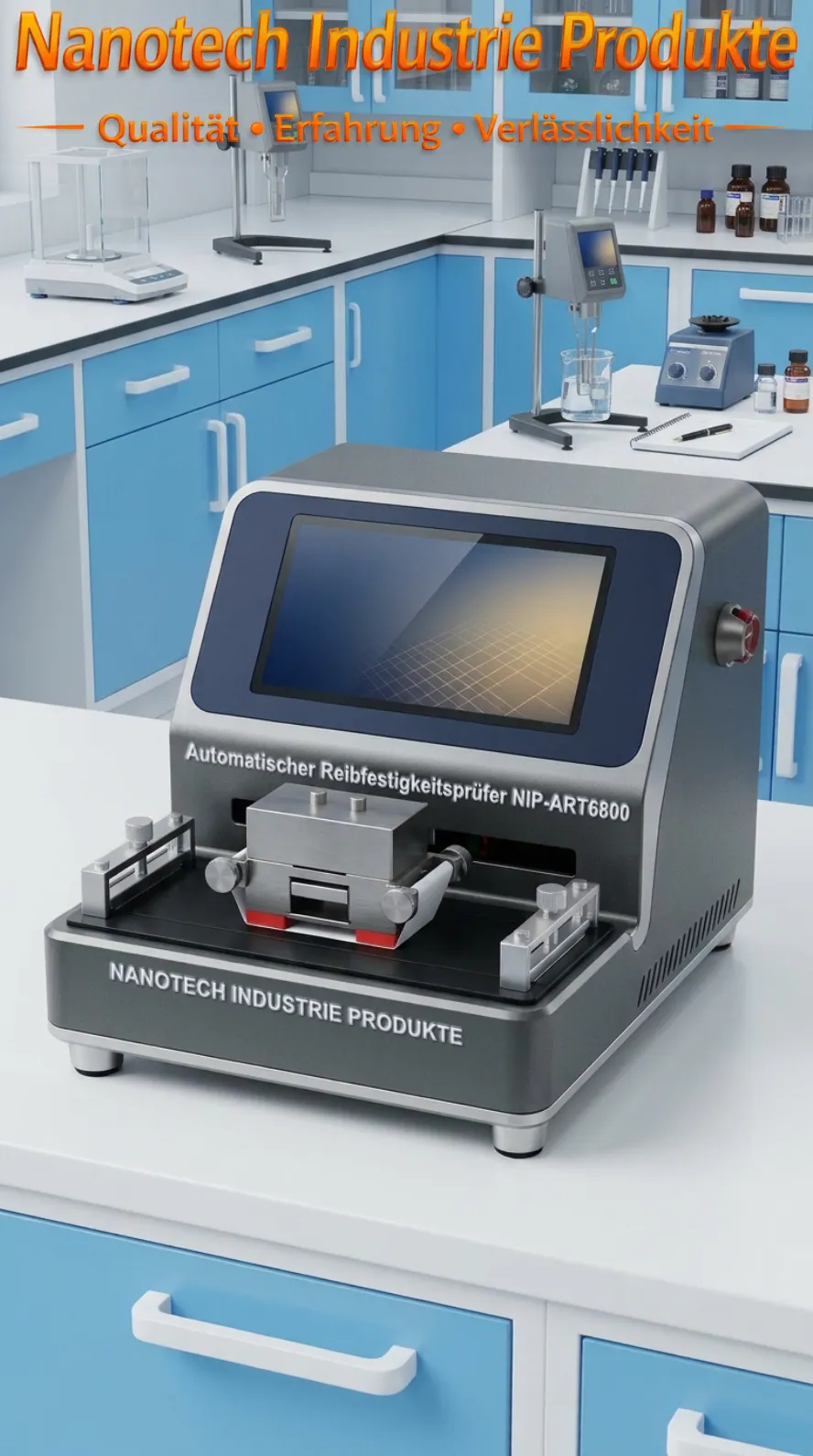
Automatic friction strength tester with color touchscreen – Features:
-
Latest microchip technology: High processing speed and precise process control
-
High-resolution color touchscreen display: Clear and distinct display of all test parameters
-
Intuitive graphical user interface & menu navigation: Easy to use without a long training period.
-
Stepless friction speed adjustment (5–95 cycles/min): Precise adaptation to a wide variety of testing standards
-
Wide range power supply compatibility (110–220V, 50/60Hz): Ready for immediate use on international power grids without external transformers
-
Standardized precision friction load (10 N ± 0.1 N): Guaranteed constant contact pressure according to test specifications
-
Modular additional weight attachments: Flexible adjustment of the test weight for extended tests
-
Programmable test cycles from 0 to 9,999 cycles: Automatic shut-off after reaching the set stroke rate.
-
Non-volatile parameter storage: Secure storage of user-defined test settings (SOPs)
-
Adjustable friction path options (60 mm, 100 mm, 120 mm, 155 mm): Configurable stroke lengths for specific test protocols
-
Universal sample clamping system for paper, cardboard & coatings: Secure fixing of a wide variety of substrates
-
Quick change & easy handling of the receptor paper: Minimizes setup times between test runs
-
Non-destructive surface testing protocols: Enables precise optical analysis of color transfer and abrasion.
-
Robust housing design & high-quality industrial paint finish: Durable construction for daily laboratory use
-
User-friendly operation & minimal maintenance: Reliable function with low maintenance requirements
-
High accuracy & high precision: Precisely repeatable measurement results for quality assurance audits
-
Long-term reliability: Solid mechanics for consistently precise test results
-
User-friendly application: It simplifies the daily workflow in the testing laboratory
-
User-friendly programming: Rapid configuration of test sequences
-
User-friendly sample handling: Easy insertion and replacement of the test subjects
-
User-friendly menu navigation: Logically structured user guidance via the touchscreen
-
Ergonomic design & reliable performance: Optimized workflows with high measurement stability
-
Developed in accordance with internationally recognized testing standards: Fully compliant with ASTM D5264, ASTM F1571, ISO 18947, TAPPI T 830, AS/NZS 1301.454s and MIL-STD-130
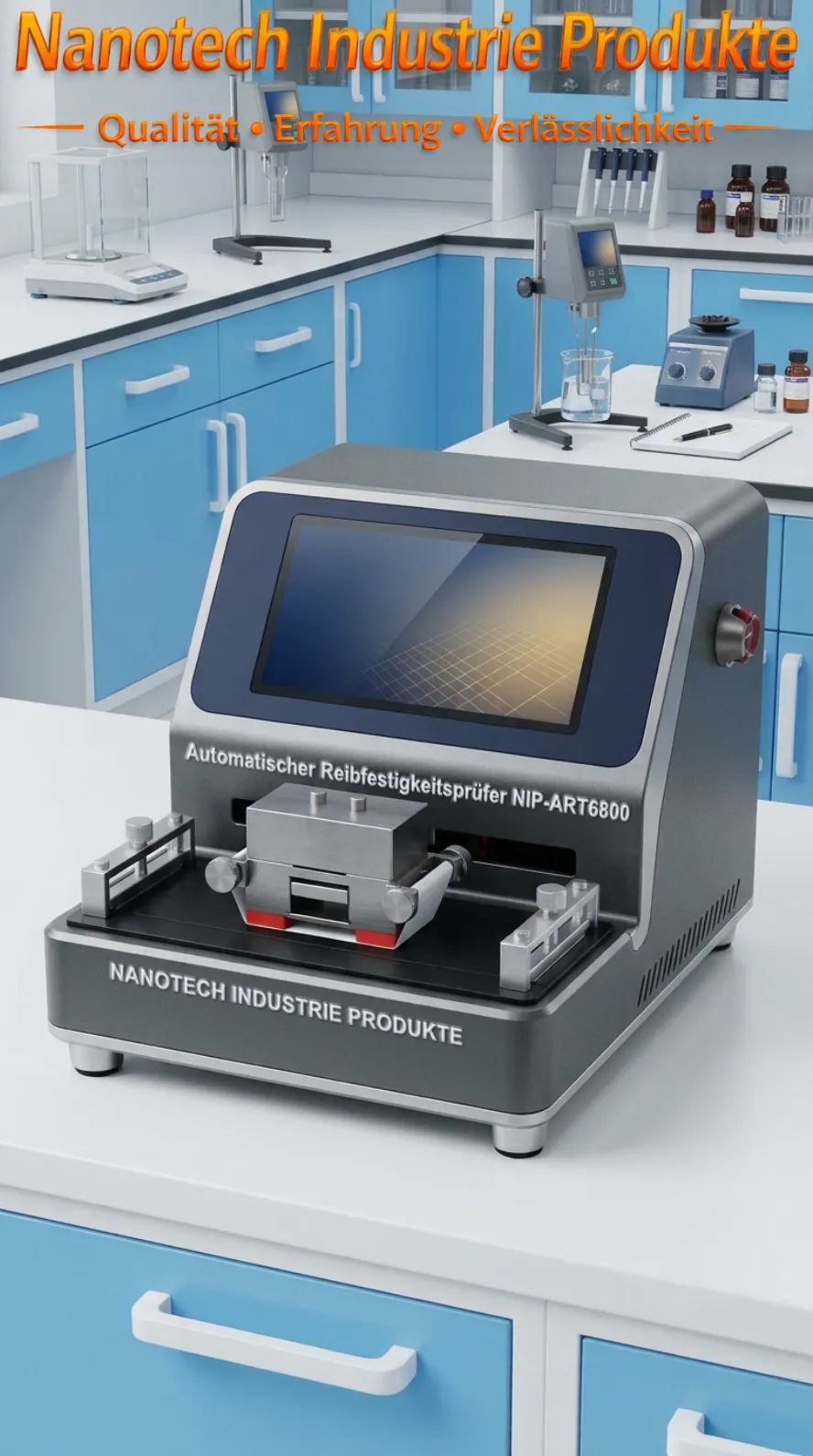
Automatic inkjet friction tester – Specifications:
| Model | NIP-ART6800 |
|---|---|
| Latest microchip technology | Yes |
| Large Color Touchscreen Display | Yes |
| Test method | Automatic friction strength testing according to the Sutherland method |
| Precision friction attachment | 10±0.1 N |
| Secondary precision test weight | 10±0.1 N |
| Precision friction attachment dimensions | 50 mm x 25 mm |
| Friction speed | 5 - 95 RPM |
| Friction repetitions | 0 - 9999 cycles |
| Friction distance | 60 mm |
| Custom-made friction distance | Available as an option |
| High Measurement Accuracy & High Precision | Yes |
| Precision testing device | Yes |
| Ergonomic Design & Reliable Quality | Yes |
| Operating voltage | 100VAC - 240VAC 50/60Hz |
| Manufactured in accordance with recognized testing standards including ASTM D5264, ASTM F1571, ISO 18947, TAPPI T 830, AS/NZS 1301.454s, MIL-STD-130 | |
Automatic inkjet printer & ink rub resistance tester - Scope of delivery:
- Automatic inkjet printing & printing ink friction tester
- Extensive Selection of Accessories
- Quality Certificate
- User Manual
- Advanced Technical Support
- Extended Warranty
Get more information about this product now. One of our experts will be happy to contact you with further helpful information.













 German
 English
 Dutch
 Dutch (Belgium)
 Danish
 Finnish
 French (France)
 French (Belgium)
 Irish
 Luxembourgish
 Norwegian
 Norwegian
 Portuguese
 Scottish Gaelic
 Spanish
 Swedish
 Welsh
 Italian